
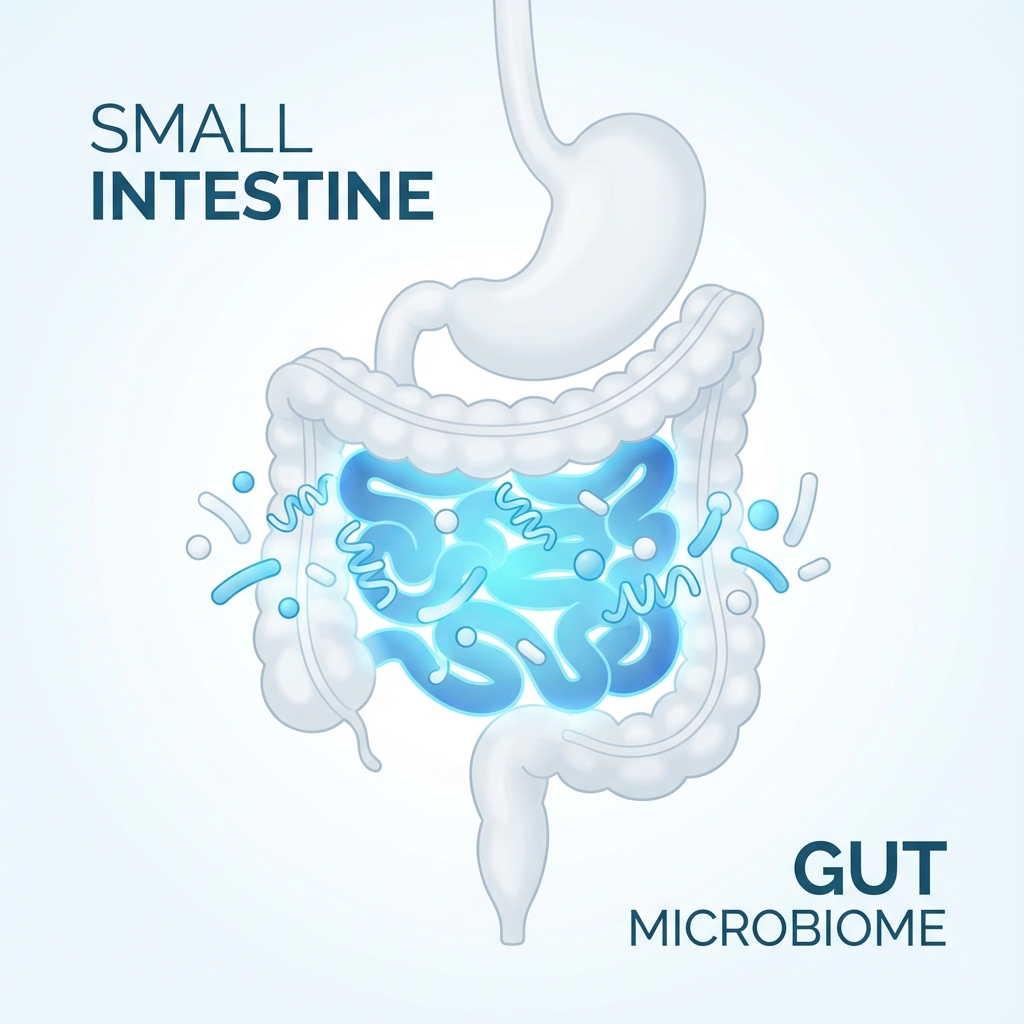
Small Intestinal Bacterial Overgrowth (SIBO) occurs when excess bacteria are present in the small intestine, where bacterial levels are normally low compared to the colon.
SIBO is a medical condition, not a catch-all explanation for digestive symptoms.
Common symptoms (not diagnostic)
SIBO symptoms overlap with many GI disorders and may include:
- Bloating and abdominal distension
- Gas
- Diarrhea, constipation, or alternating patterns
- Abdominal discomfort
- In some cases, nutrient deficiencies
⚠️ Caution: These symptoms alone do not confirm SIBO.
Who is at higher risk?
SIBO is more likely in people with:
- Altered gut motility (e.g., diabetes, scleroderma)
- Prior GI surgery
- Structural abnormalities of the intestine
- Chronic use of certain medications (including opioids)
- Certain neurological or systemic conditions
How SIBO is diagnosed
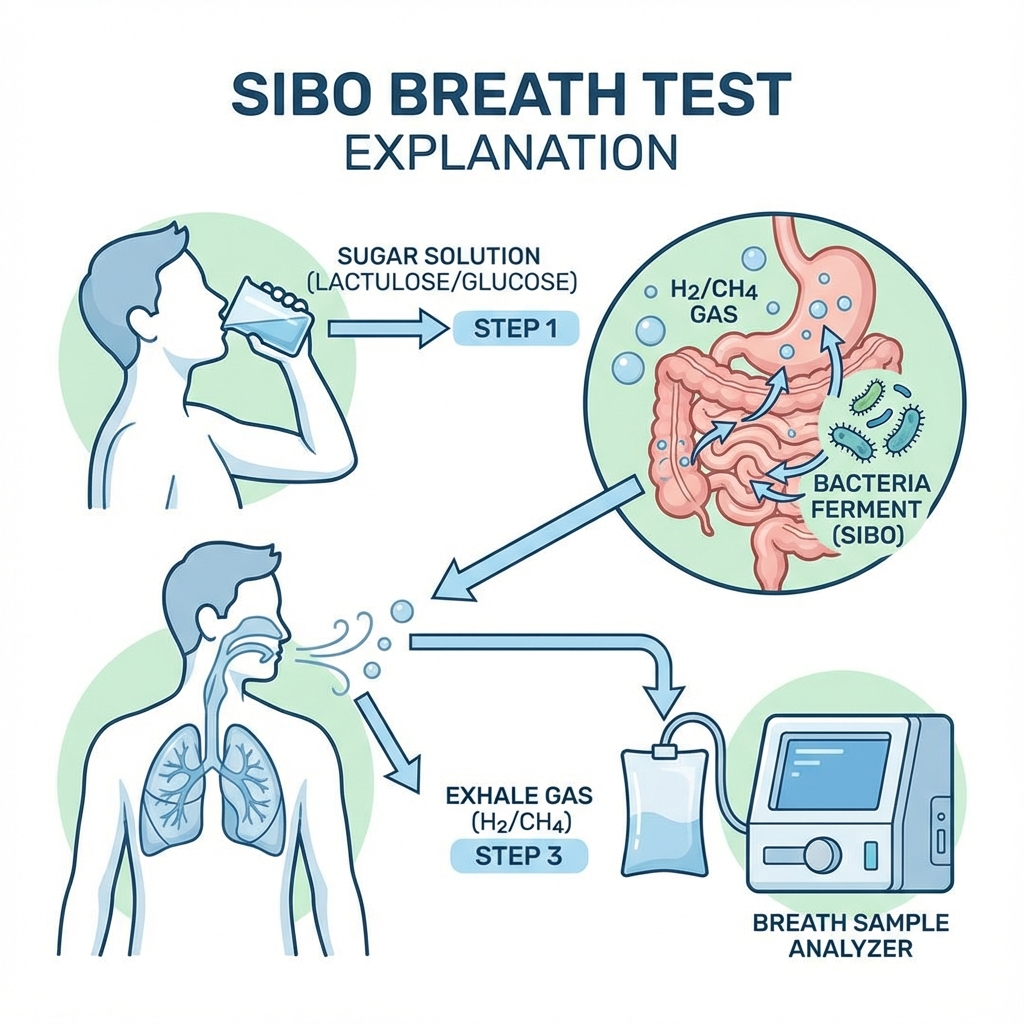
The most common diagnostic tool is breath testing, which measures hydrogen and methane gas production after consuming a carbohydrate substrate.
Important limitations:
- False positives and negatives are common
- Testing protocols vary
- Results must be interpreted in clinical context
There is no single symptom pattern that definitively confirms SIBO.
Treatment considerations
Treatment may involve:
- Antibiotics (e.g., rifaximin)
- Addressing underlying motility issues
- Nutrition support to prevent deficiencies
Extreme dietary restriction is not evidence-based and may worsen long-term gut health.
Evidence-based references
- Pimentel et al., American Journal of Gastroenterology, 2020
- Rezaie et al., American Journal of Gastroenterology, 2017
- Ghoshal et al., Gut, 2017
Disclaimer: This content is for educational purposes and does not replace
individualized medical care. Nutrition and digestive health recommendations should be personalized
and discussed with a qualified healthcare provider.