

I’ll be honest: most of us have accepted "exhaustion" as a personality trait. We wake up, hit the coffee, manage the chaos of the kids and the office, and by 3:00 PM, we feel like we’re walking through sludge. But what if that "mom brain" and afternoon slump aren't just about your schedule?
Science is now showing us that your gut is actually your "second brain." When you are chronically stressed—juggling the mental load of the matriarch—your body stays in a "fight or flight" mode.
This diverts blood flow away from your digestion, leading to:
- Uncomfortable bloating after meals
- Nutrient malabsorption (low energy)
- That feeling that your "battery" just won't charge
By focusing on your microbiome, you aren't just fixing your stomach; you’re reclaiming your mental clarity and your spark.
The Science of Stress & Gut Health
The connection between our gut and our brain is real and powerful. This is known as the Gut-Brain Axis.
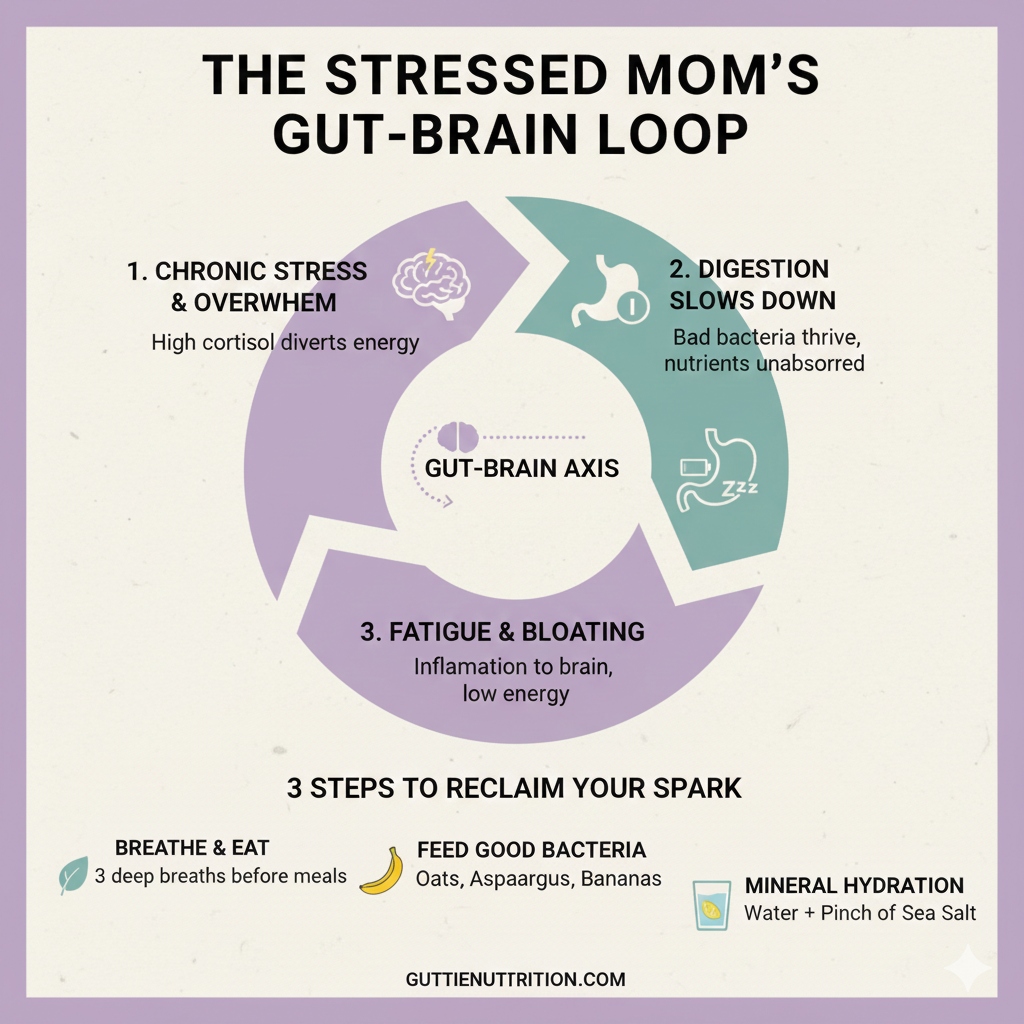
Research has shown that the microbiome plays a significant role in influencing anxiety and depression (Foster & Neufeld, 2013). Furthermore, chronic stress can directly alter our gut microbiota, creating a cycle that affects our mood and energy levels (Madison & Kiecolt-Glaser, 2019).
3 Steps to Reclaim Your Energy
- Prioritize "Rest & Digest": Take 3 deep breaths before eating. It sounds simple, but it switches your nervous system from fight-or-flight to digestion mode.
- Add Prebiotics, Not Just Probiotics: Feed your good bacteria with foods like bananas, oats, and asparagus.
- Hydrate with Minerals: Plain water isn't enough when you're stressed. Add a pinch of sea salt or lemon.
Evidence-based references
- Foster, J. A., & Neufeld, K. A. M. (2013). Gut–brain axis: how the microbiome influences anxiety and depression. Trends in Neurosciences.
- Madison, A., & Kiecolt-Glaser, J. K. (2019). Stress, depression, diet, and the gut microbiota. Current Opinion in Behavioral Sciences.